Choosing a nursery wall shelf: low-VOC finishes and safe mounting
From LivingCraftCo, a small shop in Temecula, California that makes solid pine Shaker peg shelves. Our nursery shelf is linked at the end; the checklist applies to any shelf you are considering.
A nursery is a place of blessing: new life, quiet nights, and a lot of love in a small room. A wall shelf holds the little things you reach for all day, such as a first outfit, a hat, a diaper bag or a soft toy. It will hang above a crib or changing area for years, so the material, the finish and the mounting deserve more thought than the color. Here is a plain checklist.
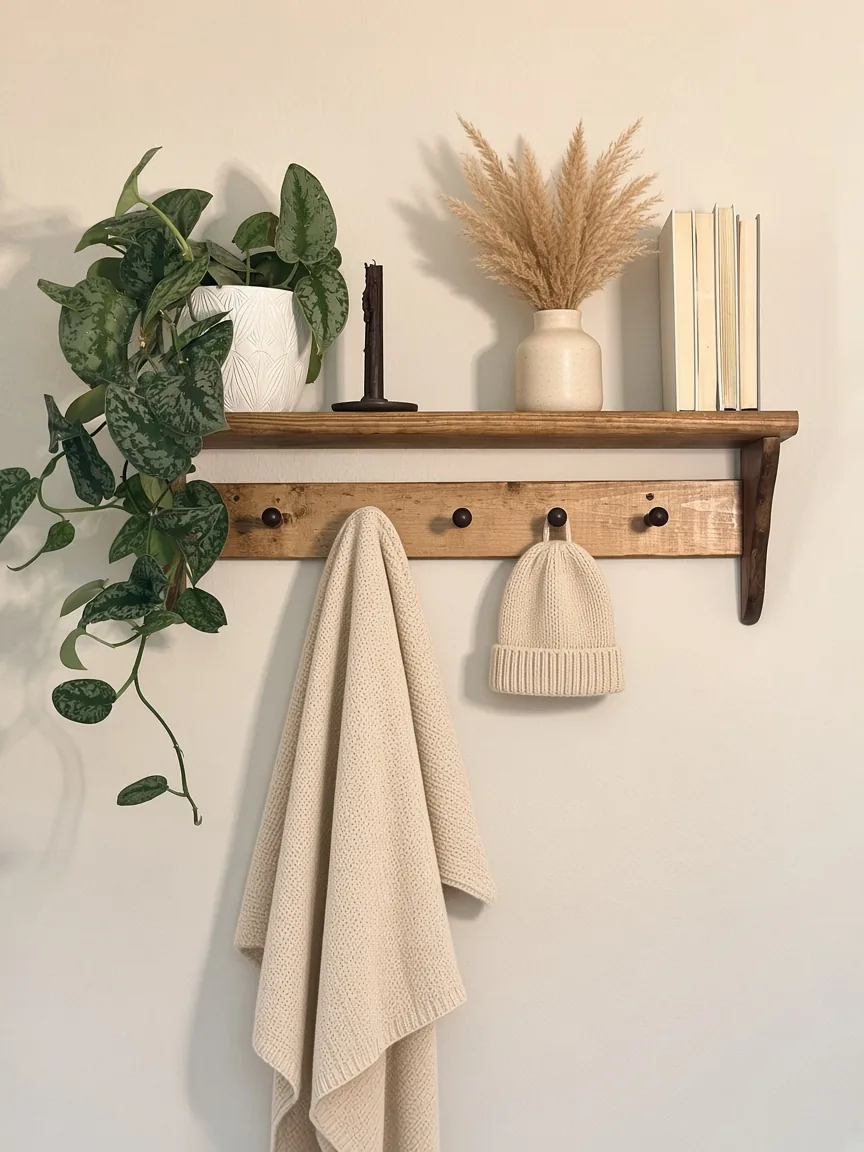
1. Material: solid wood over particleboard
Solid wood holds screws well and can be re-stained or touched up. Particleboard and MDF are glued composites; they can chip and swell and may not hold a screw as firmly over time. Our shelves are solid pine.
2. Finish: what "low-VOC" and "zero-VOC" mean
VOCs (volatile organic compounds) are chemicals that evaporate from some paints, stains and sealers as they dry and cure. Many families building a gentler, more natural home look for low-VOC or zero-VOC finishes, especially for a nursery.
- Ask any maker or store what the finish actually is, by name, and read the manufacturer's data sheet.
- "Low-VOC" and "zero-VOC" describe how a product is formulated. They are not a promise about safety for every use, and the labels are not all held to the same standard.
- Follow the finish maker's cure time and ventilation directions.
- Air out anything new before it goes in the nursery: furniture, shelves, a freshly painted wall. Open a window, run a fan, and let it sit somewhere ventilated for a few days.
- For anything a baby will touch or chew, check the maker's own guidance and your pediatrician's advice. Nothing here is medical advice.
3. Mounting: into studs, not just drywall
This is the part that matters most.
- Fasten into wall studs wherever possible. Studs in newer US homes are often 16 inches apart (sometimes 24). See our step-by-step guide on finding studs and hanging a peg shelf.
- Our shelves have small pre-drilled holes above the pegs in the backboard and come with screws. Use those screws through the holes into studs; you can drill anywhere through the backboard to line up with a stud.
- Where you cannot hit a stud, use heavy-duty drywall anchors, installed per the package instructions.
- Do not over-tighten the screws; it can crack the wood. Do not use the silver shelf brackets; they are not strong enough to support the shelf.
- Pull test it firmly before anything goes on it.
4. Placement
- Keep shelves out of reach from the crib, and do not hang anything with cords, ribbons or long straps where a baby could pull it into the crib.
- Place heavy or breakable objects low and close to the wall; keep the shelf a comfortable distance from the changing area so nothing can fall onto the baby.
- Think about how it will be used at age 2 and 5. A peg shelf at child height becomes a place to hang their own jacket and bag.
5. Size: pick for the wall, not the pile
Our shelves come in 20, 28 and 46 inch widths. A 20 inch shelf suits a small wall or a spot above a dresser; 28 inches fits a typical stretch of nursery wall; 46 inches suits a longer wall and more hooks. Measure the wall and sketch it with painter's tape first.
6. Color
A wide range of stains goes with most nursery palettes: lighter tones for a bright look, darker for contrast with pale walls. Check photos in daylight where you can.
Quick checklist
- Solid wood
- A finish you can name, with a data sheet; low-VOC or zero-VOC if that matters to you
- Cure time and ventilation followed, and new items aired out first
- Screwed into studs, or heavy-duty drywall anchors where you cannot reach one
- Out of reach of the crib; no cords or ribbons nearby
- Sized to the wall
"Children are a heritage from the Lord." (Psalm 127:3) We are grateful to be a small part of the homes we build for.
Our nursery shelf
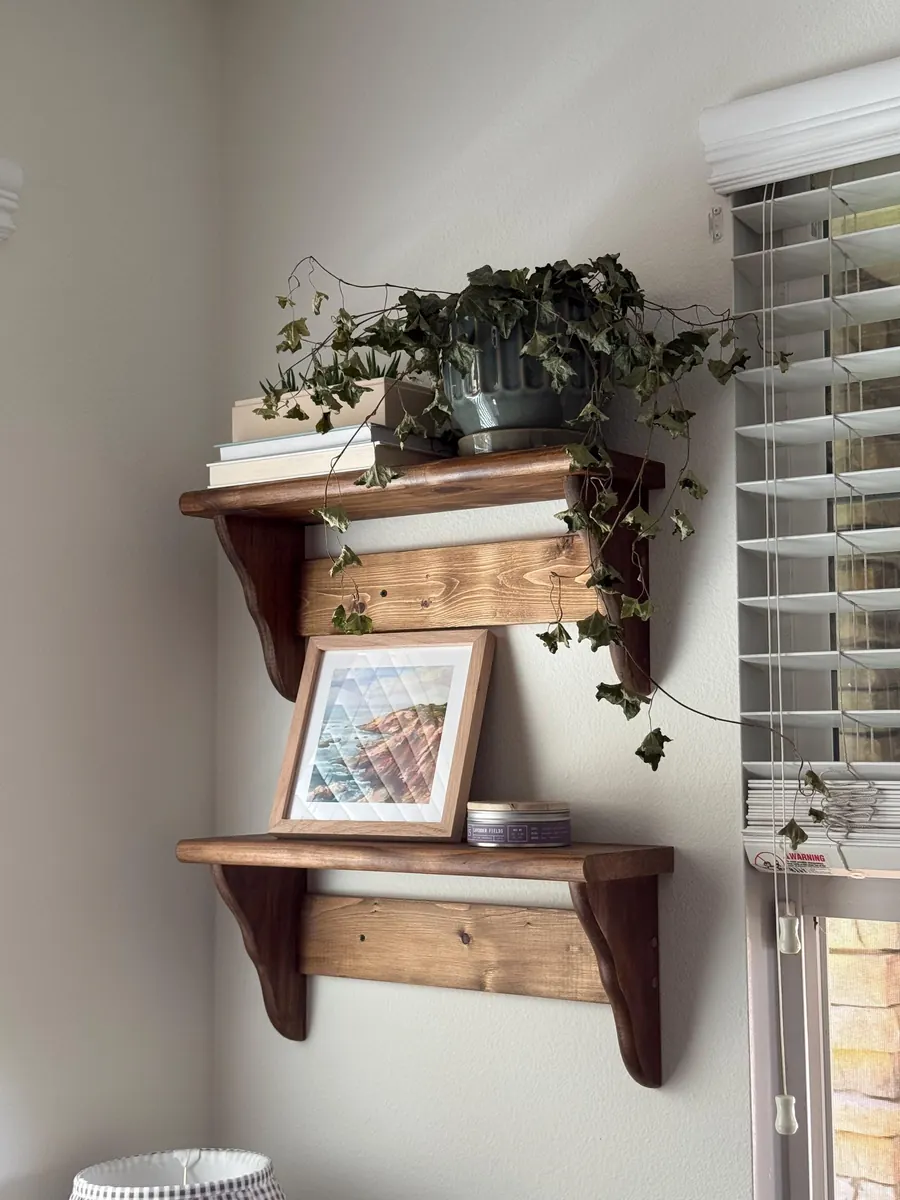
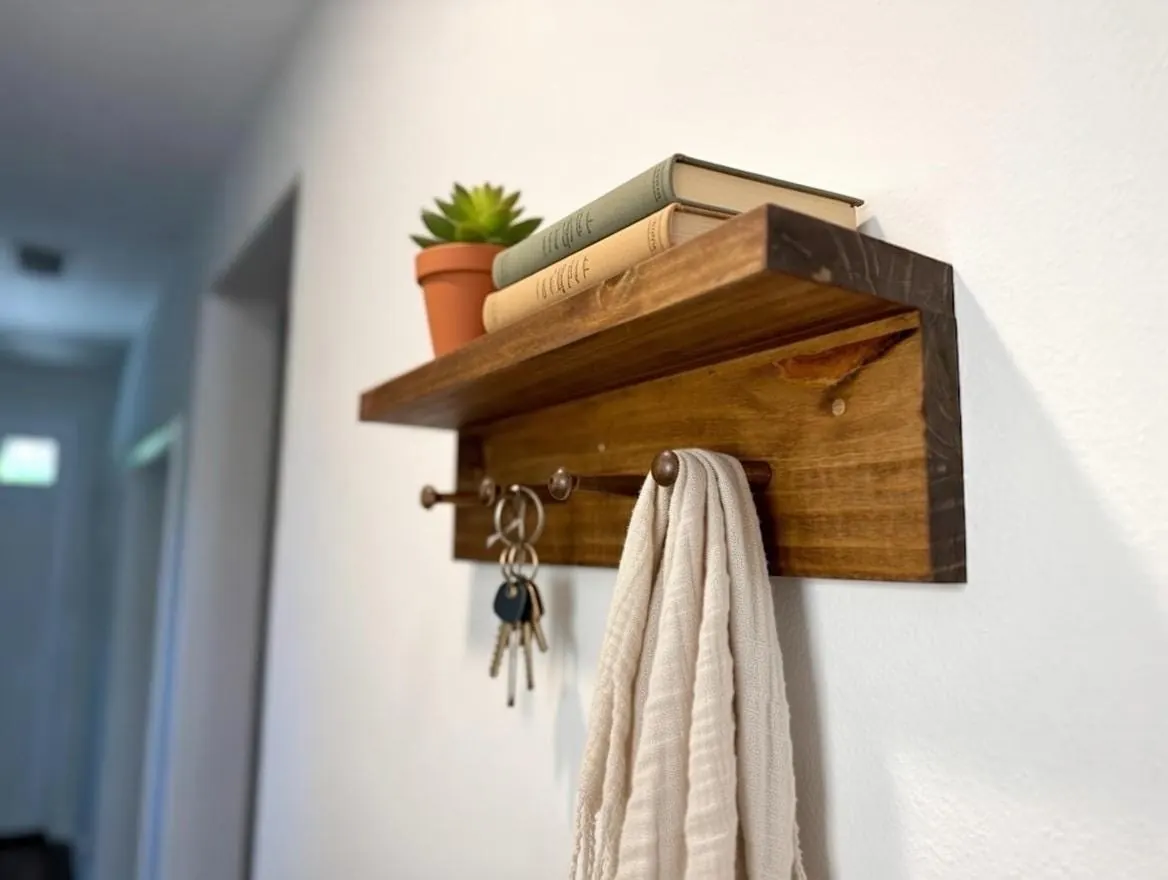
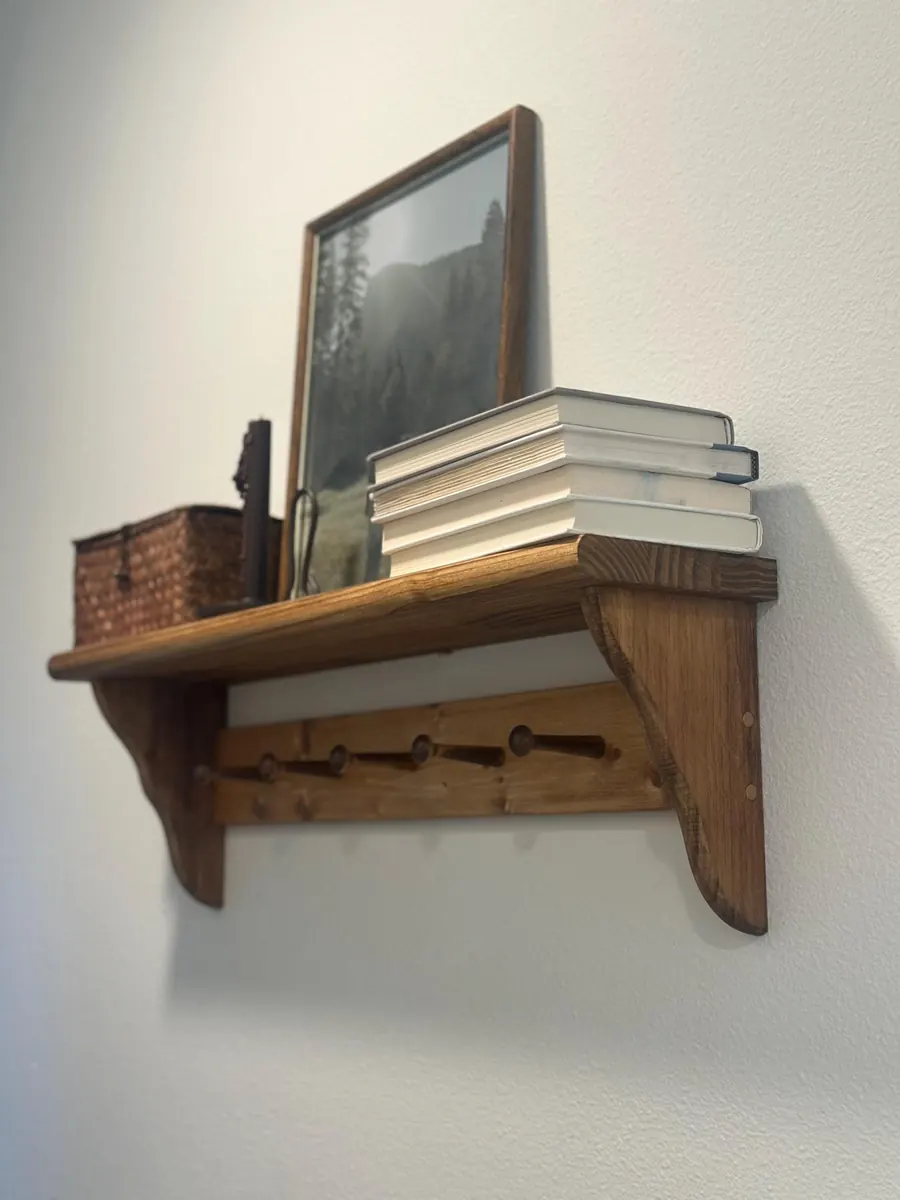
Our nursery shelf is a solid pine Shaker peg shelf, 9 inches high and 6.5 inches deep, made in our Temecula workshop. Sizes, stain colors and finish details are on the listing.
Shop the shelves
Not medical or safety-certification advice. For baby-product safety, follow the guidance of the finish and hardware manufacturers and your pediatrician.